Recently, one of our regular clients asked us whether they should choose LVT or LVP for their home renovation. They shared that both look great, but weren’t sure which would last longer or handle daily wear better. Does this confusion sound familiar? You’re not alone. Many homeowners face the same dilemma when comparing LVT vs LVP flooring.
In this guide, we break down some major differentiating factors. You’ll know which flooring works best for kitchens, bathrooms, and living areas. By the time you complete reading, you’ll feel confident in your choice. No confusion. Just clear facts to make a proper decision.
But before comparing these two floorings, let’s understand them properly.
What is LVT and LVP Flooring?
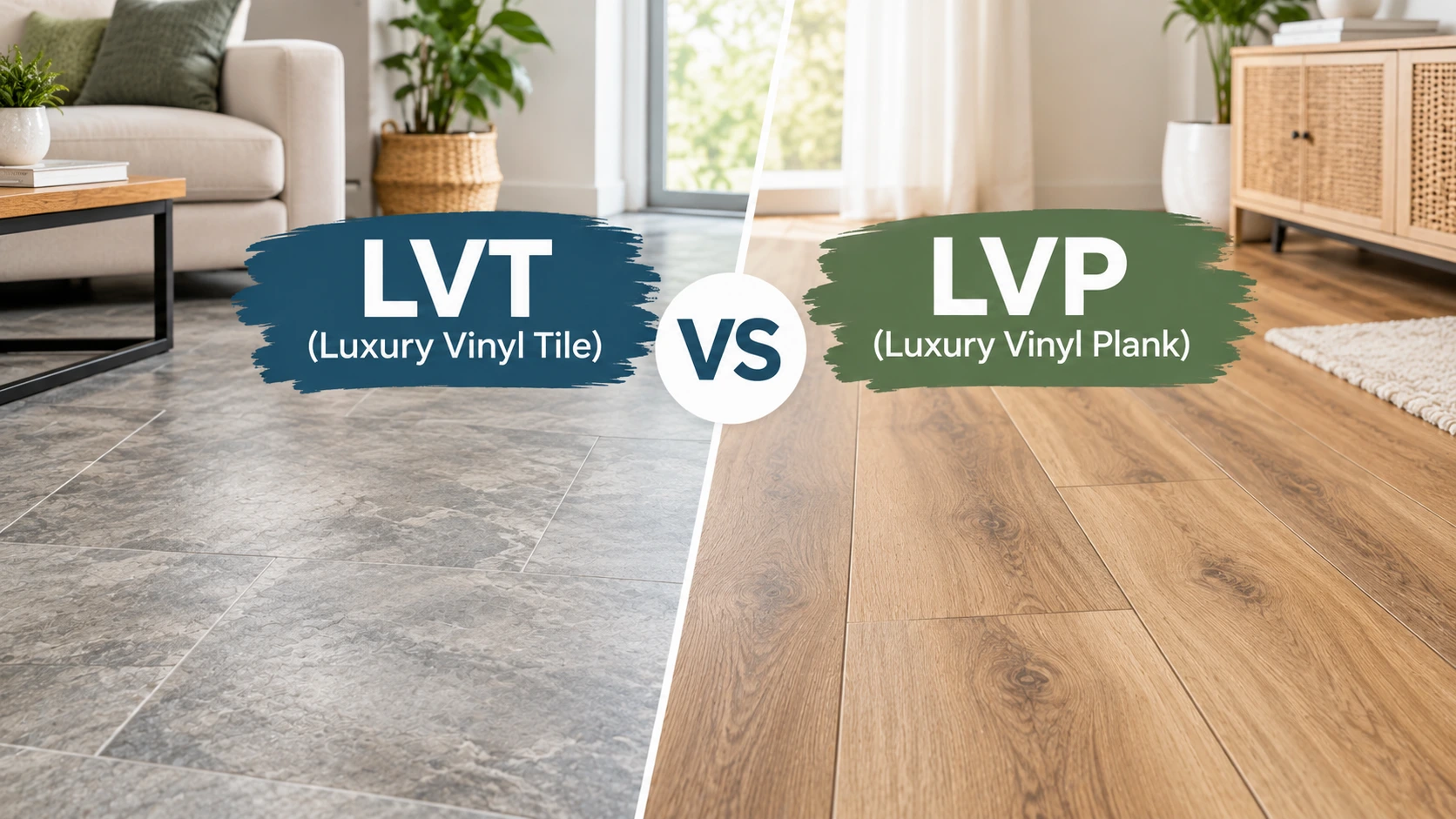
Both LVT and LVP are luxury vinyl compositions. They’re designed to resemble the look of real wood, stone, or tile at a lower cost.
- LVT (Luxury Vinyl Tile) comes in square or rectangular tiles and gives the feel of stone or ceramic.
- LVP (Luxury Vinyl Plank) comes in long planks and recreates the warm look of hardwood.
LVT vs. LVP: 5 Key Differences You Must Consider Before Choosing
LVP and LVT have the same durable foundation of luxury vinyl. So, the decision to pick one relies on its appearance, installation, water resistance, and several other factors.
Let’s have a closer look at the key difference between LVT and LVP:
- Shape and Look
LVT comes in tile‑shaped pieces, in square or rectangular shapes, designed to resemble stone, ceramic, or even marble. It brings a polished, modern look to spaces. LVP is cut into long planks that mirror the look of hardwood, complete with realistic grain and texture. It adds warmth and a natural feel to interiors.
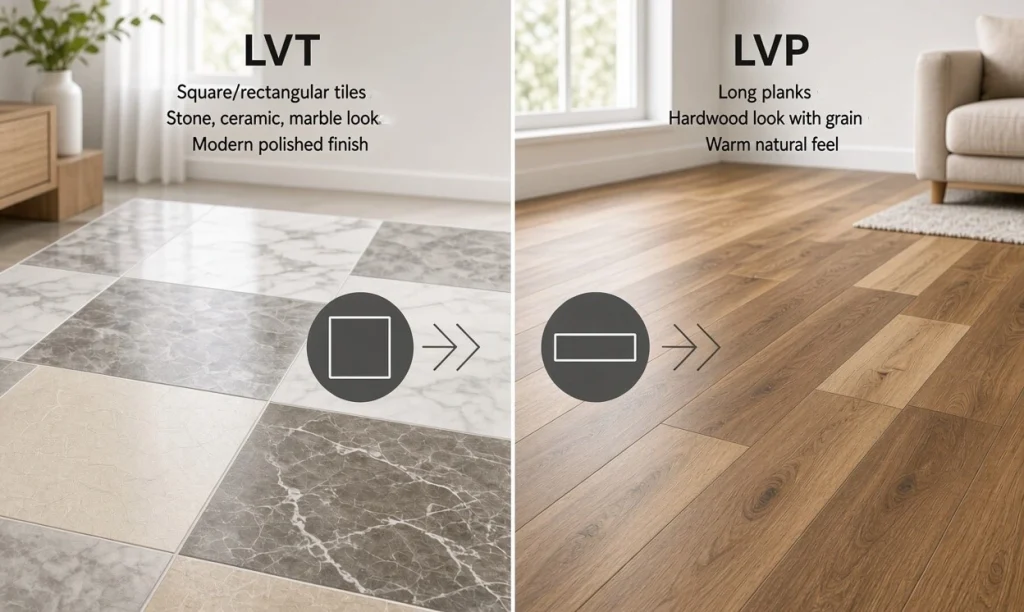
Verdict: If you want a tiled finish, pick LVT. If you prefer the look of wood, choose LVP.
- Ease of Installation
Patterned layouts and custom designs are possible with LVT. However, each tile needs to be cut and aligned perfectly, which makes self-installation tough. On the other hand, cutting and fitting of LVP is simpler and DIY-friendly.
The cut-lock system snaps planks easily and forms a continuous, flowing surface that makes rooms appear larger and more connected.
Verdict: Go with LVT if you want design flexibility and don’t mind professional installation. Pick LVP if you prefer DIY friendliness.
- Water Resistance
Moisture‑heavy areas such as kitchens, bathrooms, and entryways benefit from LVT’s rigid structure. Its tile format handles splashes, spills, and humidity better, making it a reliable choice for wet zones.
LVP can handle everyday spills, but it isn’t the best match for rooms with constant moisture exposure. Instead, it fits better in dry spaces where its warmth and comfort underfoot matter more.
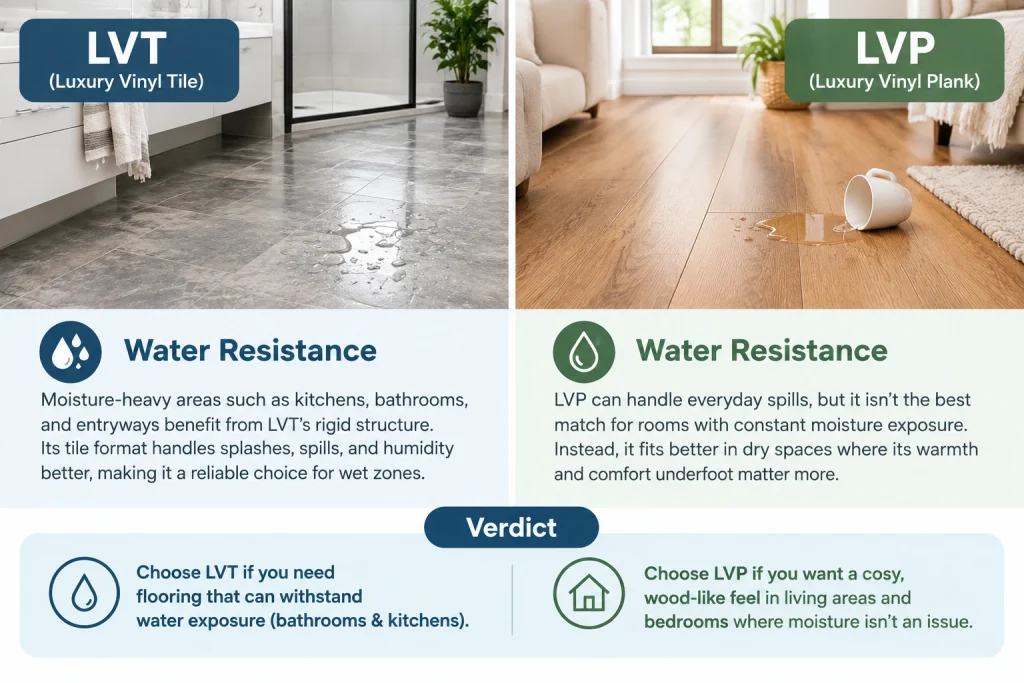
Verdict: LVT if you need flooring that can withstand water exposure (bathrooms & kitchens). LVP if you want a cosy, wood‑like feel in living areas and bedrooms where moisture isn’t an issue.
- Comfort and Feel
A firmer, cooler surface makes LVT feel closer to real tile. LVP offers a softer, warmer sensation, similar to natural wood. This difference matters in areas where you spend a lot of time standing or walking.
Verdict: Choose LVT if you prefer a solid, cool surface and LVP if comfort underfoot is more important to you.
- Ease of Repair
LVT is small, and repairing it is simple. They are easy to scrape up and replace without disturbing the rest of the floor. LVP uses a continuous click‑lock mechanism.
If one plank is damaged, you usually have to remove entire sections starting from the wall inward to reach and replace it. This makes repairs more time‑consuming and disruptive.
Verdict: Choose LVT if you prefer quick repairs, and consider LVP if you are comfortable replacing entire sections when damage occurs.
You may find this helpful: Tile & Grout Cleaning Tips
Connect With Specialists to Make the Right Choice
After comparing LVT vs. LVP, one thing is clear. The choice comes down to priorities. Both types of flooring are strong, but it’s for the owners to decide what they want for their rooms.
LVT is the better fit for moisture‑heavy rooms where resilience and easy spot repairs matter most, while LVP is ideal for living areas where warmth, seamless style, and simple upkeep are considered. Still, if you feel stuck and can’t make up your mind, it’s better to reach out to professionals like us.
At Green-Gen Carpet & Fine Rug Cleaning, we have an experienced team who specialise in cleaning and repairing both LVT and LVP flooring. Our specialists will guide you on which option suits each room, and explain how our floor care services make maintenance easier. With our assistance, you’ll not only choose the right flooring but also ensure its longevity for years to come.
Contact us now to make the right decision!
FAQs
Q. Can LVT and LVP be cleaned the same way?
Yes, luxury vinyl tile (LVT) and luxury vinyl plank (LVP) can be cleaned the same way. Both share the same vinyl composition and protective wear layer, and both respond well to sweeping, vacuuming, and damp mopping (mild cleaners). The difference lies in seams. LVP traps less dirt and is easier to mop compared to LVP.
Q. How long do LVT and LVP floors last?
LVT vs LVP lifespan depends on usage, moisture exposure, and maintenance. With regular self-care and timely professional cleaning, both can last for 10 to 20 years. However, premium quality options with protective layers can last for 30 years.
Q. Can you put a refrigerator on top of an LVP?
Yes, you can put a refrigerator on LVP flooring. Just make sure you move the fridge carefully with protective boards. Also, use pads under the legs for proper weight distribution to avoid dent marks and damage.
Q. Is there a big difference between LVT vs LVP costs?
Not really. Both LVT and LVP roughly range from $2 to $10 per sq. ft. for materials, plus installation. But prices can vary depending on brand and finish. However, LVT may add slightly more to overall project costs because its installation is often more complex.