How to clean natural fiber carpets? A question that bothers many homeowners. The reason is simple: unlike synthetic ones, natural fibers such as jute, sisal, seagrass, and wool require extra care as they react poorly to excess moisture and harsh scrubbing.
A single spill or an attempt at cleaning with the wrong method can result in water marks, shrinkage, or even mold growth. The idea of natural fiber carpet cleaning becomes especially challenging for families who want a hygienic, fresh home but worry about damaging their investment in the process.
Hence, to bail homeowners out of this misery, we decided to share practical insights based on professional experience and real homeowner challenges. Keep reading this carpet care guide to find safe cleaning methods, signs that expert help is needed, and some preventive measures to consider.
Why Cleaning Natural Fiber Carpets is Tough
Natural fiber carpets are tough to clean not only because of their sensitivity to moisture but also due to their intricate design. Hand‑woven knots, tightly spun threads, and textured weaves trap dirt and oils deep inside the fibers, making it difficult.
Natural fibers such as jute, sisal, seagrass, and wool have irregular surfaces that hold onto soil while resisting easy release of water or liquids. Apart from this, aggressive scrubbing or heavy detergents used on fabric often risk permanent damage.
Safe Household Remedies to Clean Natural Fiber Carpets
Natural fiber carpet cleaning may feel confusing, but our technicians say it’s simple if you follow the right steps. The key lies in respecting the fabric design, knots, threads, and textured weave and applying gentle methods.
When handled properly, even delicate fibers like jute, sisal, seagrass, and wool can be maintained at home without risk of severe damage. Here’s what our team thinks one must do for eco-friendly natural fiber carpet cleaning:
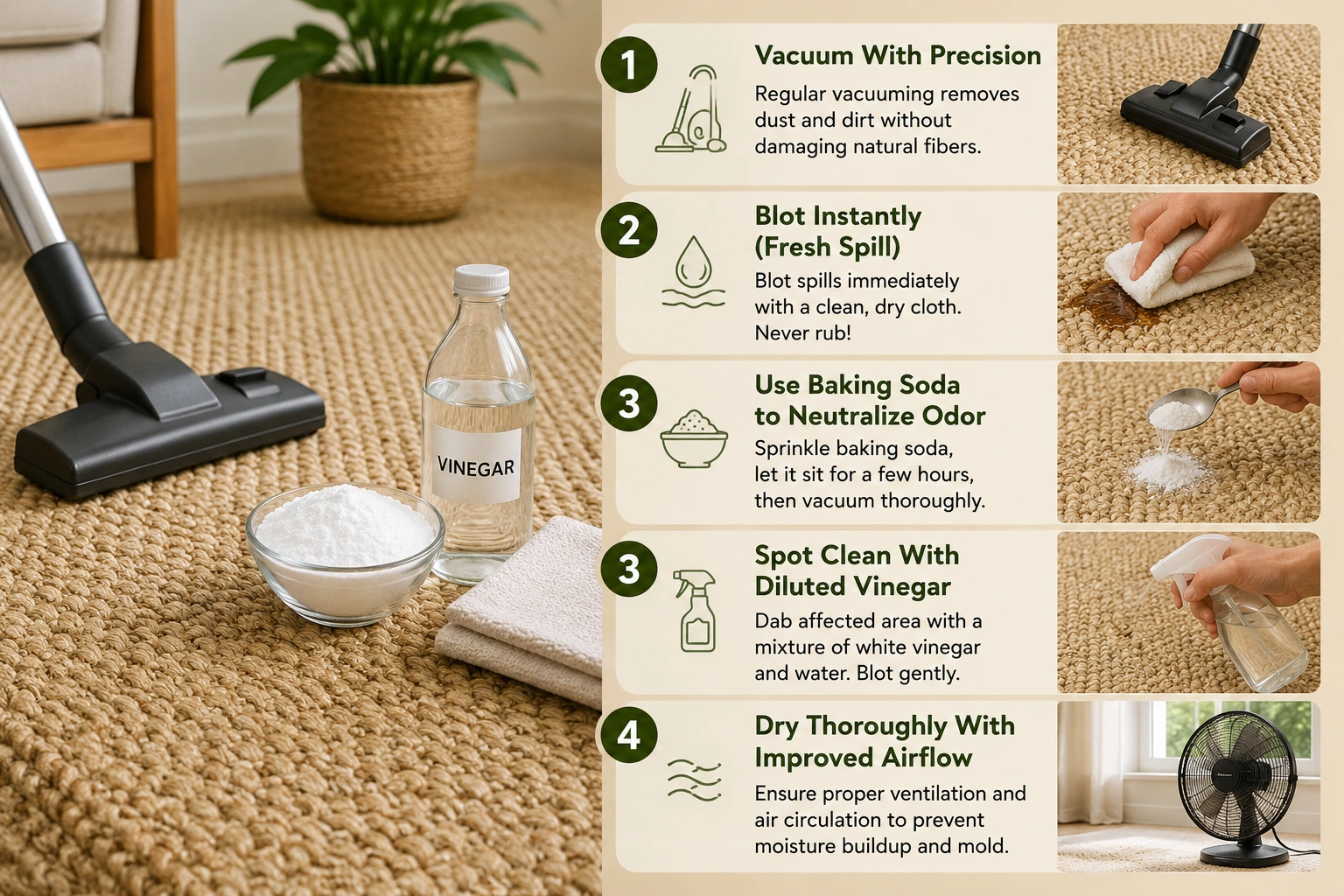
1. Vacuum With Precision
Use suction‑only mode. Make two slow passes across each section: one forward, one back. Focus on edges, corners, and seams, where grit collects in knots and threads. Use a crevice tool for tight spots. This will lift embedded soil without fraying fibers, keeping the carpet pile fresh and resilient.
2. Blot Instantly (Fresh Spill)
Place a clean white cloth over the spill, press firmly, and lift. Repeat until no moisture transfers. Never rub; rubbing distorts the weave and drives liquid deeper into the carpet pile. Our team considers that correct blotting prevents stains from setting and preserves the carpet’s natural texture.
3. Use Baking Soda to Neutralize Odor
Sprinkle a light, even layer of baking soda across the carpet. Let it sit for 20 to 30 minutes, then vacuum using the same two‑pass method. This absorbs oils and neutralizes odors safely, leaving a fresh smell while maintaining fiber integrity.
3. Spot Clean With Diluted Vinegar
Mix white vinegar with water to remove stains from natural fiber carpet. Dampen a cloth (never soak) and blot gently. Always test on a hidden edge first to check for discoloration. Blotting will remove light stains without causing fiber distortion or color loss.
If the stain is severe or has already set in, repeat the blotting process at short intervals. Wait and observe; if discoloration persists, it’s better to call in professional carpet cleaners like us to help.
4. Dry Thoroughly With Improved Airflow
Position a fan or dehumidifier near your carpet area. Keep air moving until the fabric feels completely dry. Natural fibers must not remain damp, so consider opening windows for proper ventilation. Doing this will prevent warping, mildew, and cellulosic browning, extending carpet life.
Now, we understand that sometimes there’s a shortage of substance in the house. So, if vinegar or baking soda isn’t available, you can use a dish soap solution for mild stains, a lemon juice and water mixture as a natural deodorizer, or salt to absorb fresh spills.
For tougher stains, rubbing alcohol or soap + water may work. If you don’t have these or are hesitant to use them, try an EPA Safer Choice commercial carpet cleaning solution and see if it resolves the issues.
Signs You Need Professional Natural Fiber Carpet Cleaning
Once you are done cleaning, observe the carpet. If there is no improvement in fabric condition, it indicates a need for professional intervention. As per our technicians, below are some of the prominent signs that highlight the need for expert help:
- Persistent stain marks on the carpet, even after thorough cleaning.
- Distortion, felting, or fraying of fabric after DIY cleaning suggests fibers have reacted to moisture or abrasion.
- Lingering odors, even after using baking soda or improving ventilation. In our experience, it indicates that bacteria or mildew are embedded deep in the carpet.
- Professionals apply antimicrobial treatments and controlled drying to eliminate odor sources.
- Uneven drying, damp patches, or browning after cleaning because of a moisture imbalance.
- Sunlight fading, visible discoloration, or uneven tones despite rotation means UV damage has set in.
You may find this useful: Commercial Carpet Cleaning v/s DIY
Preventive Measures for Your Natural Fabric Carpets
It’s important to be proactive and take some precautionary measures yourself. Our team thinks it’s the best way to keep carpet in optimal condition.
Here are some tips for you to consider:
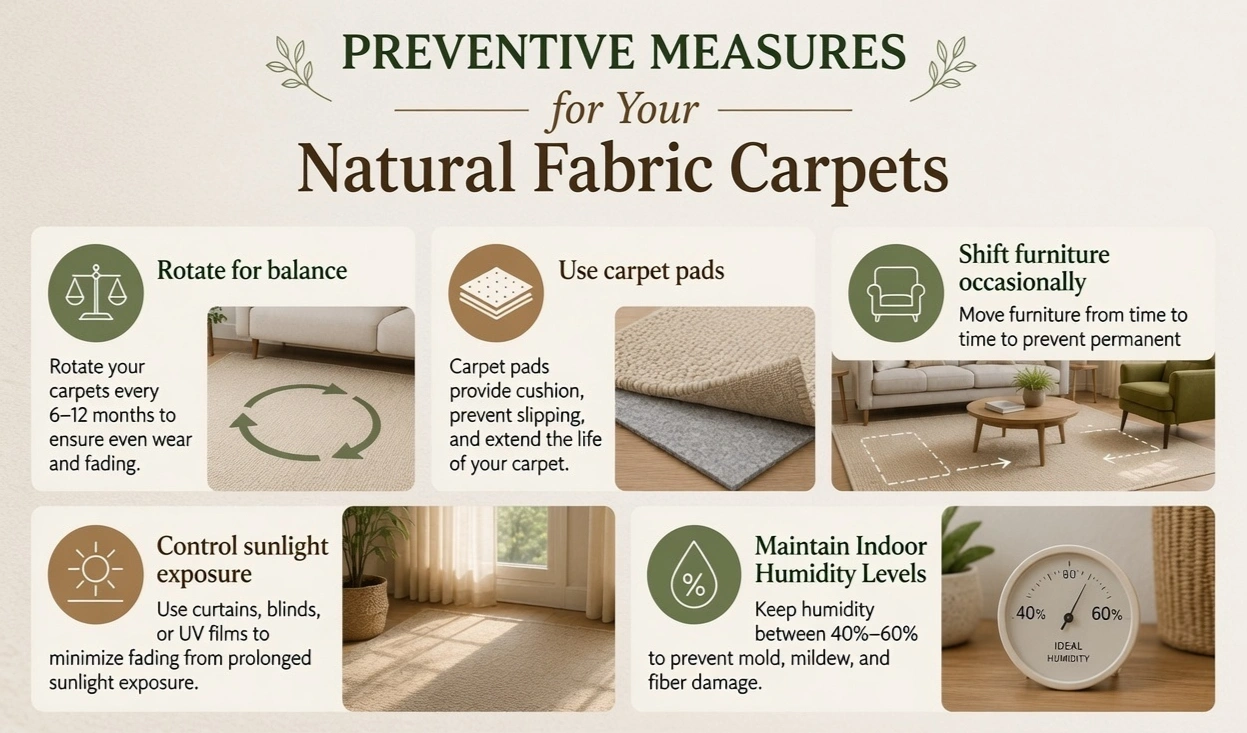
- Rotate for balance
Every 3 to 4 months, rotate furniture placement or carpet direction to prevent uneven fading and wear from sunlight or foot traffic. Balanced rotation distributes pressure and fabric exposure evenly, minimizing risk of damage. - Use carpet pads
Keep breathable carpet pads beneath your natural fiber carpets to reduce friction, prevent slipping, and cushion heavy furniture. Pads reduce fiber stress and protect against premature wear. - Shift furniture occasionally
Move chairs, tables, or sofas slightly every few months to avoid permanent dents or compressed fibers. Furniture shifting prevents deep impressions and keeps the weave uniform. - Control sunlight exposure
Use blinds, curtains, or UV‑filtering window films to prevent direct sunlight exposure to your carpets. Sunlight control prevents fading and discoloration, preserving natural tones. - Maintain Indoor Humidity Levels
Use a dehumidifier or HVAC system with humidity control to maintain optimal humidity levels. This helps protect delicate fibers from swelling or brittleness.
Preserve Your Natural Carpet Fabric With Expert Care
Maintaining a clean natural carpet fiber seems easy, but precise action is needed. The smallest of mistakes, such as over-wetting or using an improper solution, could cause fabric damage. You need to follow a gentle routine of carpet cleaning with preventive care and schedule on-time professional help. It’s the best way to secure the fabric condition.
At Green-Gen Carpet & Fine Rug Cleaning, our IICRC‑certified team has over 15 years of experience in carpet cleaning. Using eco‑friendly, Green Seal‑certified solutions and advanced low‑moisture extraction techniques, we eliminate hidden dirt and debris without harming natural fibers. Our deep cleaning process not only restores freshness but also improves the longevity and resilience of your natural carpet fibers.
Give us a call now to ensure your delicate carpet doesn’t lose its vibrant look.
FAQs
Q. Can you steam clean a natural fiber rug?
Steam cleaning is risky for natural fibers. Excess moisture can cause warping or shrinkage issues. Use low‑moisture methods or simply contact a certified professional like us for safe results.
Q. How often should I clean natural carpet fiber?
Light maintenance is recommended monthly, but deep cleaning should be done every 12 to 18 months, or every 6 months, depending on foot traffic. This helps maintain fabric structure in the long term.
Q. How long does it take natural fiber rugs to dry?
Drying can take 12 to 24 hours depending on humidity. Always ensure airflow to prevent mildew. Our technicians use high‑powered extraction and air movers to cut drying time significantly, often to just 6 to 8 hours.
Q. What solutions should be avoided on natural fiber carpets?
Avoid bleach, ammonia, and high‑pH cleaners. They can discolor or weaken natural fibers. We recommend using mild solutions or professional care for safe results.