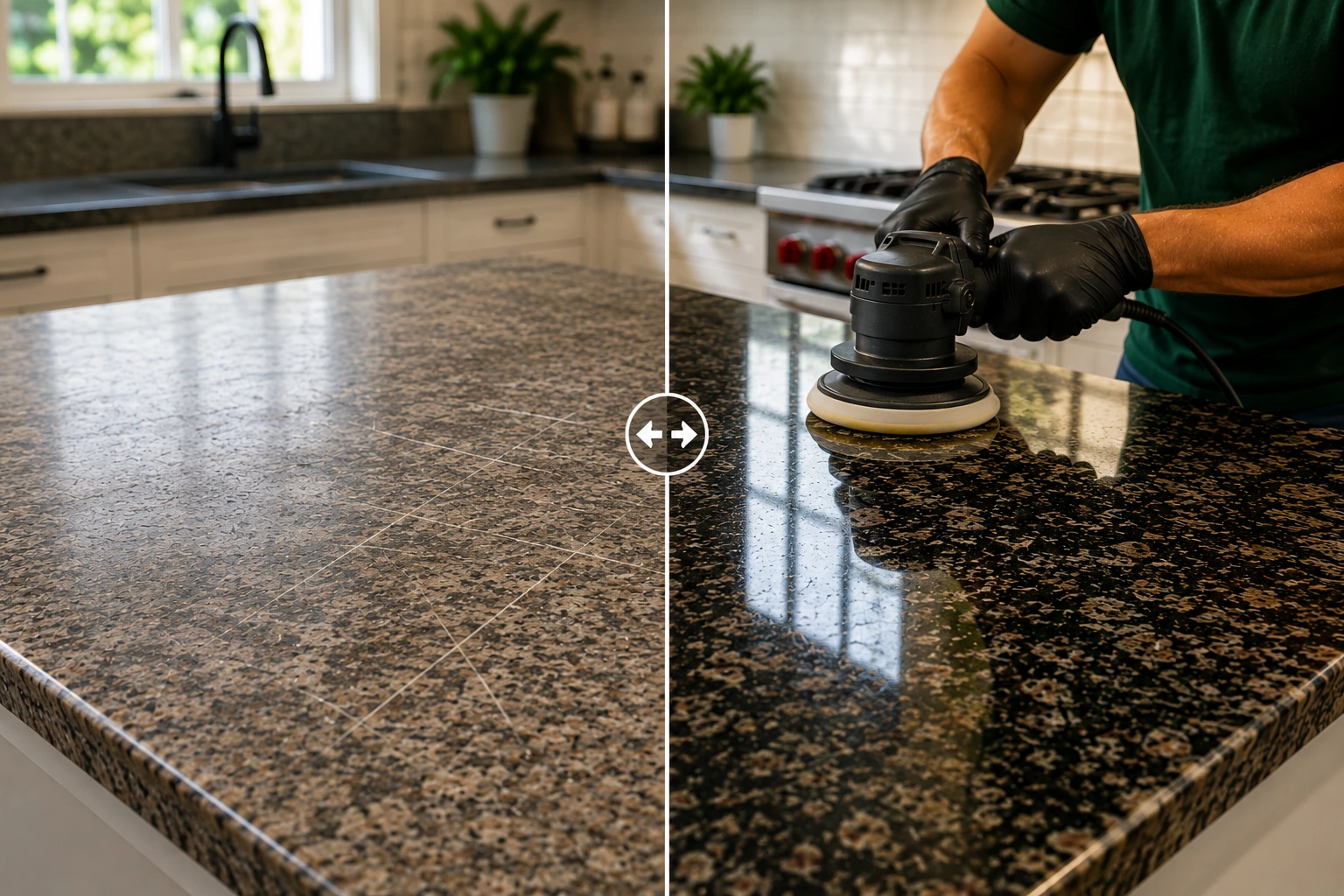
Recently, we’ve had many homeowners call our team and ask about how to restore dull or scratched countertops. Many shared the same concern: it was hard for them to see their once‑beautiful countertops lose their shine and show scratches, and they needed to know some effective methods.
Based on these discussions, it became clear to our team that many of the owners lacked knowledge on what would work on their countertop type and when professional help becomes essential.
That’s why we’ve created this guide, based on insights shared by our professionals. Keep reading to explore proven restoration techniques, best solutions for different materials, and instances highlighting when professional service is the right choice.
Common Challenges Across Various Countertops
Countertops are everyday work surfaces in kitchens, bathrooms, and utility spaces. Each material comes with its own vulnerabilities. Understanding the differences is crucial if you need proper restoration results with DIY actions:
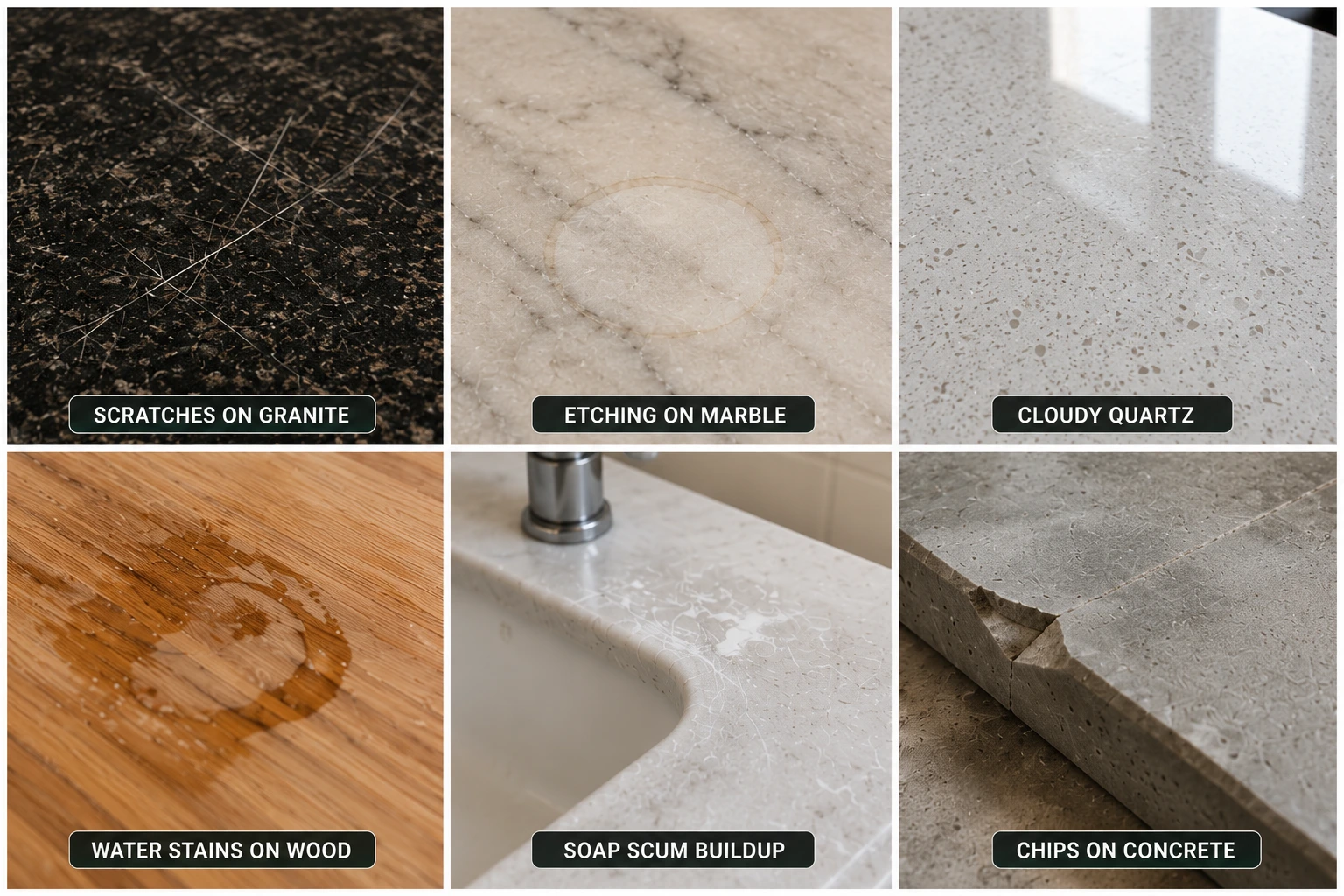
- Granite and Quartz: Durable but not invincible. Chips, scratches, and dull spots often appear after sealing lapses or heavy cookware scratches the surface.
- Laminate: Affordable and versatile, yet prone to scratches and edge wear. Once the protective layer is compromised, damage spreads quickly.
- Butcher Block/Wood: Warm and natural, but easily dulled by water stains, knife marks, and everyday wear. Regular sanding and oiling are essential.
- Marble: Elegant but soft. Acidic spills cause etching, leaving cloudy patches that frustrate homeowners.
- Concrete: Stylish and customizable, but susceptible to chips and staining if not sealed properly.
- Porcelain: Glazed surfaces resist most stains, but soap scum and hard water deposits can dull the finish. Unglazed versions are more porous, making grease and dyes harder to remove.
DIY Tips to Restore Dull or Scratched Countertops for Homeowners
In our reconditioning work, we’ve learned that every countertop requires a unique restoration approach. When it comes to suggesting tips to homeowners, our technicians consistently recommend using household remedies because they’re safe, accessible, and gentle on surfaces. It keeps countertops in ideal condition for pros to apply their techniques.
Here’s what our specialist team thinks you must do to restore dull or scratched countertops in different areas of your house:
1. Kitchen Countertop
Daily cooking exposes surfaces to knife marks, hot pans, and food spills. Over time, grease films and scratches dull the finish, especially on wood and laminate material. These issues gradually make countertops look worn and less vibrant.
DIY actions:
- Granite/ Quartz
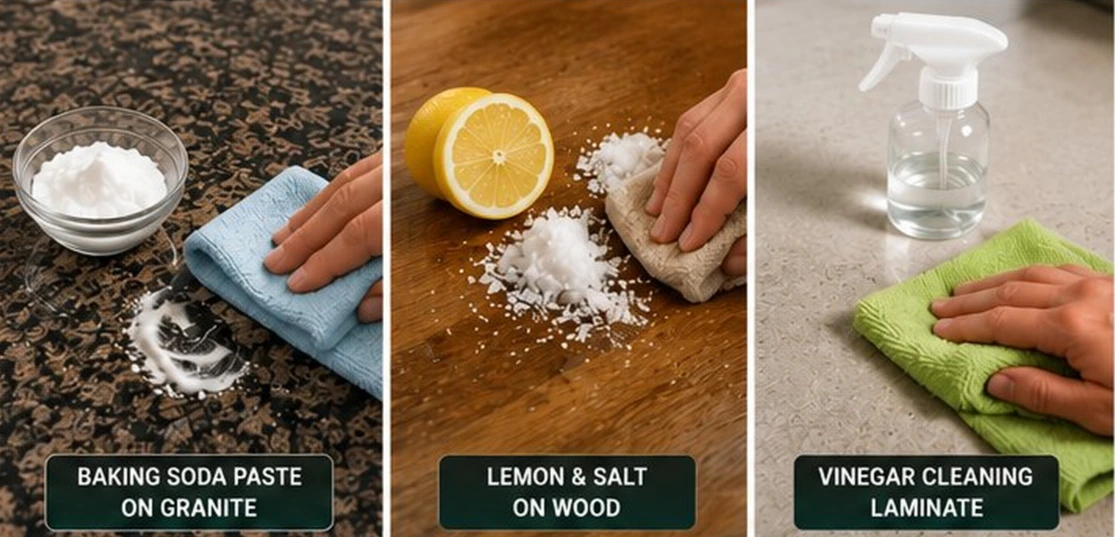
To address dull granite countertops or remove haze from quartz, form a paste of baking soda and water. Apply the mix to the affected spot, then rub gently with a clean microfiber cloth in a circular motion. Rinse with clean water and dry thoroughly to have a refreshed surface. - Wood/Butcher Block
Wear and tear on kitchen counters because of knives and stains, especially on the wood ones, is common. Sprinkle coarse salt over the stained area and add lemon juice to lift discoloration. After rubbing lightly, dab the surface clean and dry. Finish conditioning with food‑safe mineral oil, and allow it to absorb before buffing, to restore the natural shine and protect against future damage. - Laminate/Tile
Laminate surfaces often lose sheen and show scratches. Mix vinegar and water, and spray it over the counter. Wipe away grease film with a soft cloth, as it will enhance shine, then add a few drops of olive oil and buff gently across the surface, leaving the laminate looking refreshed and smooth.
2. Bathroom Countertops
Persistent exposure to water, soap, and cosmetics leads to cloudy residue, etching, and stubborn stains. The surfaces are vulnerable to harsh cleaning solutions, especially those with acidic components, and may leave visible marks. As a result, the countertop appears faded or uneven in shine.
DIY actions:
- Marble
Marble is vulnerable to etching and stains from acidic products. To treat minor marks, spread a baking soda paste over the affected area and cover it with plastic wrap. Leave it for 24 hours, then remove and rinse with clean water. Dry thoroughly with a soft cloth; repeat the process if needed for refreshing results. - Concrete
Countertops in bathrooms made of this material appear faded or cloudy due to continued exposure to water, soap, cosmetics, and other solutions. Clean the surface with a mix of mild soap and warm water, then rinse and dry completely to prevent moisture damage. Apply a thin layer of polish across the surface, buff evenly, and allow it to cure, which reseals the concrete and protects against future staining. - Porclean /Tile
Porcelain and tile counters often accumulate soap scum and hard water stains. A paste of baking soda and hydrogen peroxide will work well here. Spread it evenly over the residue buildup, let it sit for several minutes, and scrub gently using a soft brush. Thoroughly rinse and dry with a clean cloth to restore clarity and shine.
3. Utility/ Laundry Countertops
Detergents, cleaning agents, and heavy use trigger discoloration, water rings, and residue buildup near laundry countertops. Surfaces lose their shine with repeated exposure, and the area appears dull.
DIY actions:
- Concrete
Concrete surfaces near utility areas that are exposed to detergents appear faded or cloudy. A baking soda scrub helps neutralize stains, rinse the surface, and dry it thoroughly. Apply a protective polish afterward to maintain durability. - Laminate
Tile and laminate in laundry areas accumulate massive detergent residue. Use a diluted alcohol solution, apply with a cloth, and it cuts through residue buildup and restores a clean surface. - Wood
Wood countertops near laundry sinks are vulnerable to water rings. They can be treated with a blend of olive oil and white vinegar. Once the mix is formed, rub it in circular motion. This simple remedy will lift marks and restore a smooth finish.
Pro tip: If you are planning to use commercial solutions while cleaning, consider EPA Safer Choice options.
When Professional Countertop Restoration Is Required
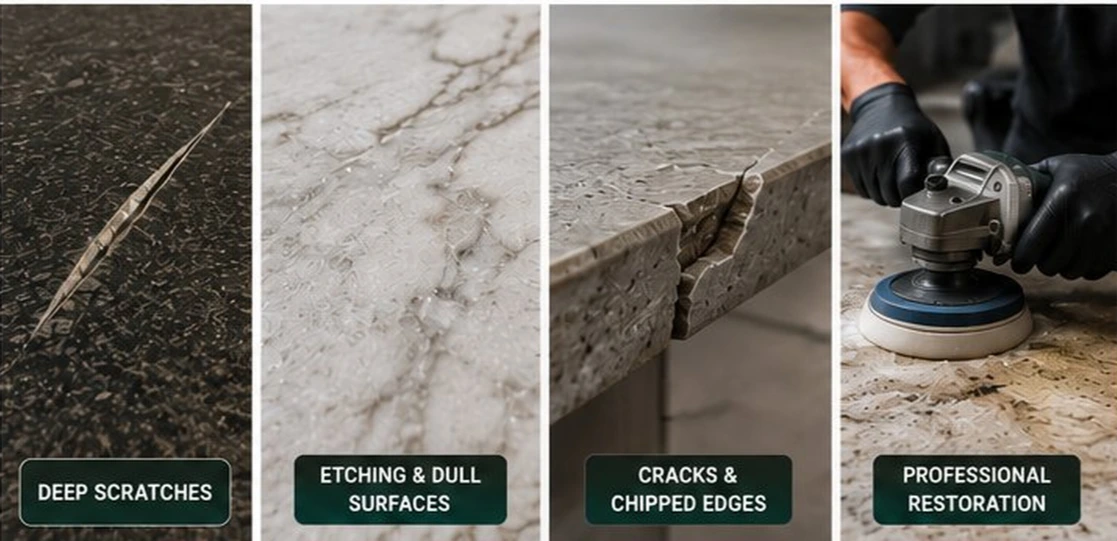
Even after using household remedies such as baking soda pastes, vinegar solutions, or lemon‑salt scrubs, some countertop problems cannot be fixed. Prolonged exposure to heat, moisture, or substances can cause damage that DIY methods only mask temporarily. Recognizing these signs helps homeowners avoid wasted effort.
Signs DIY Felt Short
- Persistent stains: Marks that remain even after repeated scrubbing or poultice treatments.
- Deep etching: Acid damage on marble or stone that leaves permanent dull patches.
- Recurring haze: Quartz or concrete surfaces that cloud again soon after DIY cleaning.
- Structural wear: Chips, cracks, or warping that simple cleaning cannot address.
- Loss of protective seal: Surfaces that absorb spills quickly, showing the sealant has broken down.
Benefits of Professional Countertop Restoration
You observed the signs which indicate the need for expert help. Once you decide to avail professional reconditioning services, you can expect the following benefits:
- Restores Dull Countertops
Professional polishing eliminates haze and scratches, reviving shine on dull granite countertops or surfaces that DIY pastes can’t fully clear. - Fixes Scratched Countertops
Experts handle both surface scratches and deep scratches, smoothing etched stone and repairing marks that home remedies only disguise. - Improves Hygiene
Deep cleaning removes soap scum buildup and bacteria trapped in pores, leaving a safer food‑prep surface than DIY wipes can achieve. - Cost‑Effective
Reconditioning restores beauty without the expense of replacement. Instead of living with faded or cloudy countertops, professional care revives clarity affordably. - Enhances Property Value
A countertop that shines after professional countertop restoration improves your home’s appeal, impressing guests and adding resale value. - Long‑Term Countertop Care
Sealing and strengthening prevent countertop etching from acid or hard water stains on countertops, ensuring durability for years to come.
You may find this helpful: Tile and Grout Cleaning Tips 2026
Get Your Countertops the Expert Care it Deserves
Countertops in kitchens, bathrooms, and utility areas face constant challenges. From water stains and soap scum to scratches and etching. While DIY remedies can help with minor issues and help restore dull or scratched countertops, it’s professionals who ensure lasting beauty and strength, saving money compared to replacement, and adding long‑term property value.
At Green‑Gen Carpet & Fine Rug Cleaning, we have an experienced team of IICRC-certified technicians that delivers dependable countertop reconditioning services in Elgin, IL, designed to restore both the appearance and durability of your surfaces. Our specialists use proven techniques and Green‑Seal‑Certified products to remove scratches, repair damage, and bring back that elegant, glossy finish.
Give us a call now, and our team will make your countertops shine again with improved strength and appeal.
FAQs
Q. What kind of countertops are popular right now?
In 2026, the most popular countertops are warm quartz designs, natural quartzite, expressive marbles, terrazzo, and darker stones such as soapstone, blending durability with bold colors and unique edge profiles. Our technicians believe that homeowners are choosing options that are practical for daily use and also visually appealing.
Q. How to identify if a scratch is surface-level or deep?
Surface‑level scratches look faint and can be rubbed easily with gentle polishing. Deep scratches feel rough to the touch, catch a fingernail, and often leave visible marks. If marks don’t fade with simple care, contact professionals for countertop restoration.
Q. Can you re-polish a quartz countertop?
Yes, you can polish a quartz countertop, but only for light scratches or dullness. Minor marks are reduced with quartz‑safe polishing compounds and microfiber rubbing, while deep scratches or chips usually require expert care.
Q. How much does it cost to restore granite countertops?
Restoring granite countertops typically costs between $1,000 and $5,000, depending on size, condition, and finish. Most mid‑range kitchen projects fall within the range of $2,000 to $3,000, while small restoration projects fall as low as $300 to $800. Contact us to discuss different rates.