
Move-in move-out carpet cleaning is central to property transitions. When someone moves in, it follows that the other has just moved out and vice versa. Yet both tenants and landlords often struggle during transition phases: tenants worry about passing inspection and securing deposits, while landlords face the challenge of preparing the property quickly, while recognizing and resolving hidden wear and tear.
Since we are experienced in helping landlords and tenants with both phases, we decided to share this guide to ensure the carpets and property meet professional standards.
The piece provides clear direction on how to pass inspection, secure their security deposit, and leave behind a hygienic reputation during move-out. For landlords, it offers a framework to assess property condition after a tenant leaves, document wear and tear, and prepare the space with confidence before the next occupant arrives.
Why Move-In Move-Out Carpet Cleaning Matters
Carpet cleaning is one of the most disputed rental transition issues in Chicago and often the largest source of security deposit deductions. Our team believes that understanding both the cleaning process and the legal framework under the Chicago Residential Landlord Tenant Ordinance (CRLTO) is essential for tenants and landlords to avoid costly disputes.
Legal Framework for Normal Wear and Tear vs Damage
CRLTO § 5‑12‑080 establishes that landlords cannot charge tenants for normal wear and tear. Damage, however, may be chargeable if it goes beyond ordinary use.
| Normal Wear and Tear (Not Chargeable) | Damage (Potentially Chargeable) |
|---|---|
| Dulling or flattening from regular foot traffic in high-use areas | Pet urine staining that penetrates the backing and pad |
| Slight discoloration from normal use over 2+ years | Burn marks, holes, or gouges |
| Fading from sun exposure | Heavy soiling or stains beyond what occupancy would produce |
| General traffic-lane patterns after 2+ years | Staining requiring specialized odor remediation or padding replacement |
Document Everything And Protect Your Deposit
Keep these records to defend against wrongful deductions:
- Move-in condition checklist (landlord-provided, CRLTO § 5‑12‑080).
- Pre-cleaning photos (dated, timestamped, same angles for comparison).
- Professional cleaning receipt with service details.
- Post-cleaning photos (same angles as pre-cleaning).
- Written communication confirming cleaning completion.
Our experts note that thorough documentation is the strongest safeguard against unfair deductions. CRLTO § 5‑12‑110 requires landlords to return deposits within 45 days with itemized deductions, and these records support renters in small-claims disputes.
How the Move-In Move-Out Carpet Cleaning Process Unfolds in Chicago
Having established why move-in move-out carpet cleaning matters, the next step is to understand the cleaning process itself. Lets see how it uncovers in Chicago properties:
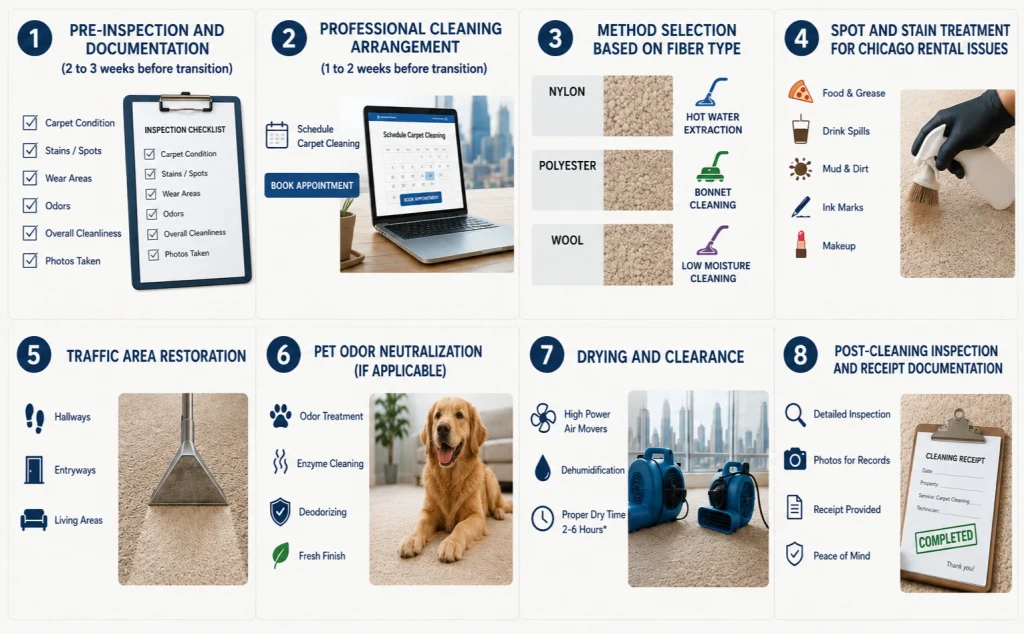
1. Pre-inspection and documentation (2 to 3 weeks before transition)
Whether preparing for move-out or move-in, schedule a walkthrough to photograph and document carpet condition; this protects against unfair deductions. As a landlord, it establishes a baseline for the next occupant. Take dated, timestamped photos from consistent angles in good lighting.
2. Professional cleaning arrangement (1 to 2 weeks before transition)
Hire a Chicago-based professional carpet cleaning company like us that has experience in assisting renters with move-in/move-out carpet cleaning.
A detailed, itemized receipt with service date, address, method used, and cost is received post carpet cleaning completion, which helps with a smooth transition.
3. Method selection based on fiber type
- Synthetic carpets (nylon, polyester, olefin: common in Chicago rentals) are compatible with professional hot water extraction.
- Wool/natural fibers require dry cleaning to avoid shrinkage or dye bleeding.
4. Spot and stain treatment for Chicago rental issues
- Pet urine (enzyme-based treatment, 15 to 30 minutes dwell time).
- Wine/food stains (oxidizing pre-treatment).
- Grease/cooking stains (degreaser pre-treatment).
- Tracked-in dirt/salt residue (especially in winter).
5. Traffic area restoration
Here, focus is on cleaning and restoring carpets near hallways, entry points, and main living areas where soil concentration is heaviest. These zones often require extended dwell time and multiple extraction passes.
6. Pet odor neutralization (if applicable)
Enzyme or oxidizing deodorizers break down the organic compounds of urine odor. To remove pet odors and stains, you can expect an additional $100 to $300 piling up to the total cost.
7. Drying and clearance
Carpets require 6 to 24 hours of drying time, depending on Chicago’s humidity and airflow. Tenants should not schedule final move-out cleaning on the last day; landlords should allow drying before new tenants move in.
8. Post-cleaning inspection and receipt documentation
After cleaning is done, you get a dated service receipt noting the method, areas cleaned, and pre-existing damage. Tenants should keep this for deposit protection; landlords should retain it for compliance with CRLTO and as proof that can be handy in the future.
DIY vs Professional Carpet Cleaning
Before scheduling professional service, tenants or landlords can take simple steps to improve carpet condition and reduce visible wear:
- Vacuum thoroughly. Focus on traffic areas, hallways, and entry points.
- Spot-clean minor stains, use mild, pH‑balanced solutions for food or drink spills.
- Eliminate odors, sprinkle baking soda overnight, then vacuum to reduce pet or cooking smells.
- Lift pile in traffic lanes, use a carpet brush or rake to reduce flattening.
These DIY steps show good‑faith effort, but they rarely meet Chicago’s professional standards.
Our technicians follow a simple 4‑step carpet cleaning process: eco‑treatment, agitation, extraction, and rinsing. It delivers quick results without compromising fabric integrity. In our years of providing services, we’ve found this eco‑friendly approach gives tenants confidence in protecting deposits and landlords assurance of a hygienic, ready‑to‑rent unit.
You may find this interesting: Commercial Carpet Cleaning vs DIY
Responsibilities of Landlords While Handling Move-in/Move-outs
Our team believes landlords play a crucial role in ensuring seamless move-in/move-out transition. Here are some significant responsibilities they must keep in mind:
| Stage | Key Responsibility | Benefit |
|---|---|---|
| Move-In | Clean carpets before occupancy; provide a move-in checklist within 5 days; photograph/video condition. | Establishes a clear baseline, prevents disputes. |
| Move-Out | Document carpet condition with photos; compare against baseline; note stains/odors and get cleaning done if needed. | Distinguishes wear vs damage, supports fair deductions, and prepares property before new tenant arrives. |
| Deduction Standards | Charge only actual cleaning costs; keep receipts; avoid excessive charges. | Protects against legal challenges, ensures compliance. |
Choose Professional Carpet Cleaning to Get Security Deposit Back
Move‑in/move‑out carpet cleaning in Chicago is more than a routine task. It’s a structured procedure that protects tenants’ deposits, ensures landlords remain compliant, and keeps properties market‑ready.
Understanding why cleaning matters, following the documented process, weighing DIY against professional service, and applying clear landlord standards, both parties reduce disputes and gain confidence in fair outcomes.
At Green-Gen Carpet & Fine Rug Cleaning, our IICRC-certified carpet cleaning specialists use green solutions, safe techniques, and modern equipment to deliver the best eco-friendly carpet cleaning results. With years of experience behind us, we ensure the carpet receives the top-notch care it deserves and leaves the house in optimal condition, facilitating a hassle-free transition between landlords and renters.
Give us a call now and let our team do the rest.
FAQs
Q. How much does move out carpet cleaning cost in Chicago?
Move‑out carpet cleaning in Chicago typically costs $195 to $500 per unit, with add‑ons such as pet odor removal, repair, or restoration costing more. Final charges depend on unit size, condition, and service scope. Contact us now to know more about prices.
Q. Can landlords charge for carpet cleaning in Chicago?
Yes, landlords can charge actual cleaning costs when carpets need more than ordinary upkeep, and deductions must be itemized with proper receipts.
Q. What happens if I don’t clean the carpet before move-out?
Failing to clean the carpet usually results in deposit deductions for stains or odors beyond normal wear, and landlords may document this against you. Protection comes only if you provide receipts or photos proving a good‑faith effort.
Q. Can landlords charge for normal wear and tear?
No. Under Chicago’s CRLTO, landlords cannot deduct for routine wear and tear, such as traffic-lane fading or light discoloration. Only damage beyond ordinary use is chargeable.