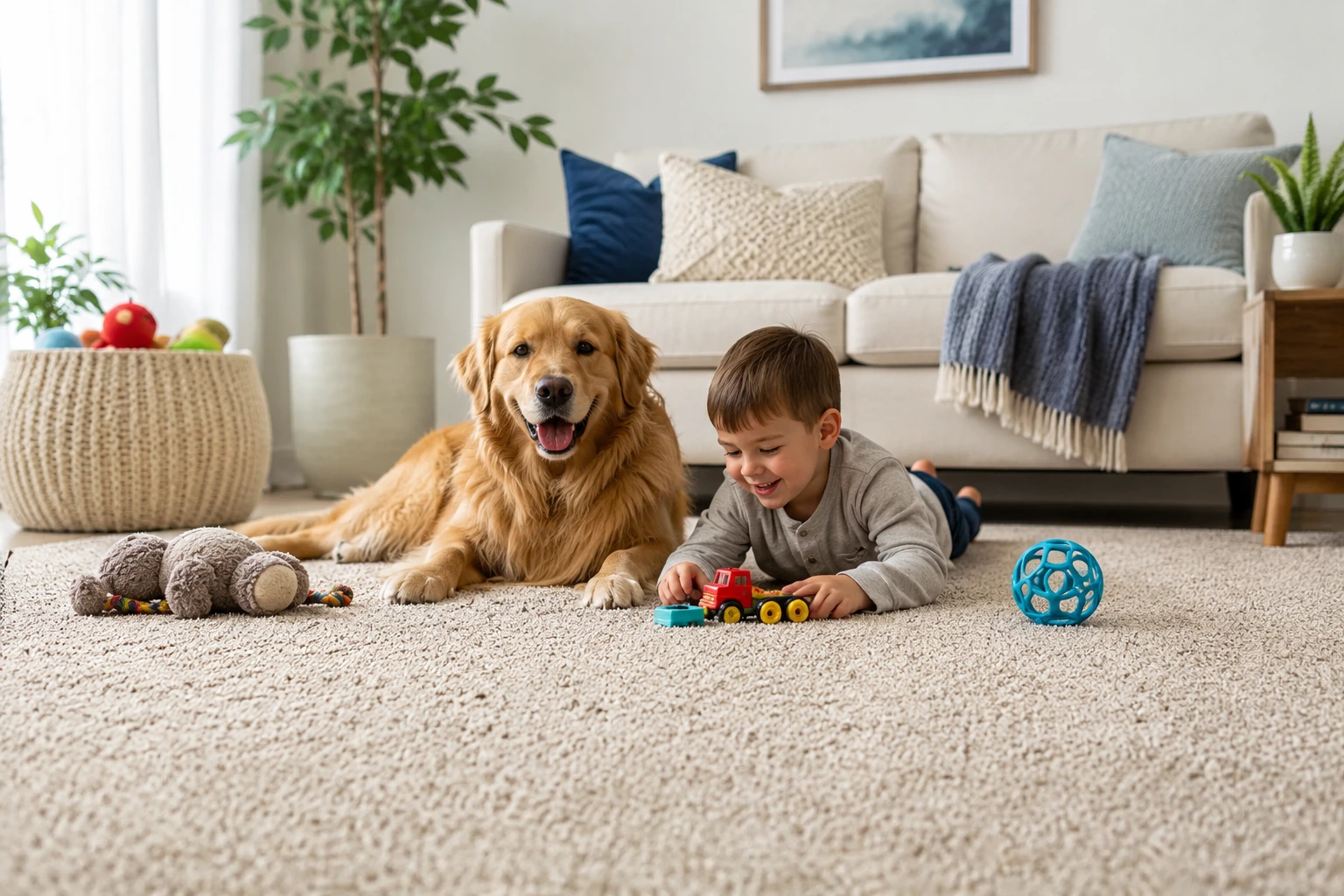

Living with pets adds warmth and companionship to a home, but it also places extra stress on carpets. Pet hair, dander, tracked-in dirt, and accidental spills accumulate faster than many homeowners expect in pet-friendly spaces.
This leads many homeowners to ask an important question: how often should pet owners clean carpets to maintain a healthy, odor-free home? The answer depends on more than routine vacuuming and varies based on daily pet activity.
This guide explains how cleaning frequency changes in homes with pets, what factors influence carpet care decisions, how to clean carpets with pet stains, and when professional cleaning is necessary to protect both carpets and overall home health.
Why Regular Carpet Cleaning Is Essential for Pet-Friendly Homes
Homes with pets experience faster carpet wear due to constant shedding, tracked-in dirt, and daily foot traffic. Pet hair and dander settle deep into carpet fibers, making carpet cleaning for pet owners essential for hygiene, not just appearance.
Pet dander buildup in carpets is a common contributor to allergies and breathing discomfort. Without regular cleaning, carpets can negatively affect indoor air quality with pets, especially in enclosed living spaces.
Pet accidents, such as urine, vomit, or spills, can quickly penetrate carpet padding if not addressed promptly. Trapped moisture encourages odor-causing bacteria, making it harder to fully eliminate pet odors from carpet later.
Routine vacuuming helps, but it only removes surface debris. Deeper cleaning is necessary to control allergens, protect carpet fibers, and maintain a healthy home environment for both pets and people.
5 Factors That Influence How Often Pet Owners Clean Carpets
Every pet household is different, which means carpet cleaning frequency should never follow a one-size-fits-all approach. The factors below explain how pet behavior, stains, and carpet type directly influence how often carpets need cleaning.
#1 Intensity of Pet Traffic, Hair, and Dander Buildup
Homes with active pets experience constant movement across carpeted areas, which leads to faster accumulation of pet hair and dander. High-traffic zones trap allergens deep within the fibers, making pet hair and dander removal more challenging over time.
Light-shedding pets usually allow for moderate maintenance, while heavy shedders require more frequent care. In homes with high pet traffic, vacuuming frequency for pet owners typically increases to three or four times per week, with deep cleaning needed every three to four months.
#2 Duration of Dirt, Spills, and Pet Accidents in the Carpet
The amount of time dirt or pet accidents remain in the carpet plays a major role in long-term cleanliness. Liquids such as urine or vomit begin soaking into carpet fibers and padding quickly, making them harder to remove as time passes.
When accidents are cleaned promptly, pet owners can maintain a standard deep cleaning schedule of every four to six months. Delayed cleanup often shortens this timeline, requiring professional carpet cleaning much sooner to prevent permanent odors and residue buildup.
#3 Type of Pet Stains and Odors Present
Not all pet stains affect carpets the same way. Surface dirt from muddy paws is usually easier to manage, while pet urine on carpet creates deeper contamination that settles into carpet fibers and padding, making pet stain and odor removal more difficult over time.
Homes dealing with occasional surface stains can follow a normal cleaning routine. When urine accidents occur frequently, cleaning frequency needs to increase. In these cases, how to clean carpets with pet urine in them often requires steam cleaning every two to three months to prevent lingering odors.
#4 Number of Pets and Their Shedding Levels
The number of pets in a home directly impacts how quickly carpets collect hair, dander, and dirt. A single low-shedding pet places far less strain on carpet fibers compared to multiple pets sharing the same space.
As the number of pets increases, cleaning frequency must adjust accordingly. Homes with multiple or heavy-shedding pets usually benefit from more frequent vacuuming and shorter intervals between deep carpet cleaning sessions to maintain cleanliness and odor control.
#5 Carpet Material and Absorption Capacity
Carpet type plays a significant role in how often cleaning is required in pet households. High-pile carpets and natural fibers absorb more moisture and trap hair and odors more easily than low-pile, synthetic options.
Absorbent carpets typically need deeper cleaning more often to prevent stains and odors from settling in. Stain-resistant or low-pile carpets allow for longer intervals between deep cleaning when maintained properly, helping to prevent stains and odors in pet homes.
Home Cleaning vs Professional Cleaning for Pet Stains
Home cleaning works for everyday pet messes, but deeper stains and odors often require professional treatment to prevent long-term carpet damage.
When Home Cleaning Works and Where It Falls Short
- Effective for fresh pet stains treated immediately
- Helps control surface messes and routine carpet maintenance
- Fails when pet urine reaches carpet padding
- Can mask odors without fully removing bacteria
Why Professional Carpet Cleaning Becomes Necessary
- Removes embedded stains, pet dander buildup, and odors
- Improves indoor air quality with pets
- Ideal for frequent accidents or multiple pets
- Recommended every three to six months for odor control
Additional Practical Tips for Pet Owners
Simple daily habits can reduce carpet wear and help control odors between deep cleanings.
- Groom pets regularly to limit shedding and reduce pet hair and dander buildup in carpets.
- Use entry mats and washable rugs to prevent dirt and stains from spreading.
- Choose pet-safe carpet cleaning products to eliminate odors without harsh residue.
- Rotate furniture and pet resting spots to prevent localized carpet odor buildup.
For persistent or recurring pet odors, professional odor removal in Elgin is often the most effective solution.
Maintain Healthier Carpets in Pet-Friendly Homes With the Right Cleaning Approach
Carpet care in homes with pets goes beyond regular vacuuming and occasional spot cleaning. Many homeowners ask, “How often should pet owners clean carpets?”, but the right answer depends on pet activity, stain severity, and how deeply odors and allergens have settled into the fibers.
At Green Gen Carpet & Fine Rug Cleaning, we use pet-safe, deep carpet cleaning methods designed to remove embedded pet stains, dander, and odors without harming carpet fibers or indoor air quality. Every cleaning service is tailored to the condition of your carpets and the specific needs of pet-friendly homes.
Contact us today to schedule a professional carpet cleaning and keep your home fresh, clean, and comfortable for both pets and family members.
FAQ
1. Is it safe for pets to walk on carpet after cleaning?
Yes, it is safe for pets to walk on carpets after cleaning once the carpet is completely dry. Professional pet-safe carpet cleaning methods use products that do not leave harmful residue when proper drying is allowed.
2. Can the smell of cleaning products harm my dogs?
Strong chemical odors can irritate dogs, especially those with sensitive respiratory systems. Using pet-friendly carpet cleaning solutions and proper ventilation helps reduce risk and keeps your home safe for pets.
3. What type of carpet cleaning is most effective for pets?
Hot water extraction, often called steam cleaning, is the most effective method for pet households. It removes deep pet stains, dander, and odor-causing residue that standard vacuuming and surface cleaning cannot reach.