Our team often gets asked when cleaning carpets in houses, “Can carpet cleaners clean hard floors too?” It’s a legit question, especially when homeowners are hoping to have one solution to clean every surface in their home. The thought process is simple: if a machine or solution works so well on carpets, what harm could there be in using it on hardwood or tile?
The speculation isn’t wrong, but in reality, such assumptions often backfire. To make sure you don’t fall for such shortcuts that could compromise your hard flooring, we’ve curated this detailed article.
It includes expert views on why carpet cleaners are not for cleaning hard floors, practical explanations, safe DIY steps to clean your hardwood, tile, or vinyl surfaces without causing issues, and a brief comparison between hard-floor and carpet cleaners.
Why Carpet Cleaners Aren’t Ideal for Hard Floors?
Carpet cleaning machines are designed to rinse fibers with water and cleaning agents, then extract the moisture. At first glance, hard floors like hardwood, laminate, or tile seem durable enough to withstand carpet cleaning machines and solutions.
Their solid surfaces give the impression that they can sustain the same treatment carpets receive. But, they don’t. Let’s understand this by analyzing issues that explain why they won’t work on hard floors:
→ Water Damage: Hard floors such as wood and laminate are sensitive to moisture. Carpet cleaners use large amounts of water, which can enter deep into seams and cracks, leading to swelling, distortion, or long‑term structural damage.
→ Surface Scratching: The stiff bristles and scrubbers are made to agitate carpet fibers; if used on hard floor surfaces, they can scratch and dull the flooring, especially on relatively softer materials such as wood or vinyl.
→ Chemical Residue: Carpet cleaning solutions are formulated with fabric-safe components and may not be ideal for sealed or polished surfaces. For instance, on hard floors, the chemical composition can strip protective coatings, leave sticky residues, or cause discoloration.
→Grout Erosion: On tile floors, sturdy water flow and improper detergents can weaken grout lines, making them more prone to crushing or mold growth.
→ Design Mismatch: Carpet cleaners are engineered to penetrate and extract from dense fibers. On smooth surfaces, their suction and agitation are ineffective, and leave behind water and cleaning agent residues that compromise the floor’s surface finish.
Floor Types That Can be Cleaned With Carpet Cleaners
Different types of floors in houses require different cleaners and solutions. Also, the idea of buying separate equipment and products can feel overwhelming and costly. The good news is that you can use carpet cleaners, especially on certain types of flooring. Let’s check them out:
- Ceramic and Porcelain Tile Floors
Highly water‑resistant and durable, it can handle carpet cleaners, moisture, and agitation. Still, care must be taken to shield grout lines and prevent erosion. - Sealed Stone Floors (Granite, Marble, Slate)
When properly sealed, they resist moisture absorption. So, pH-neutral carpet cleaning solutions can be used, which avoid etching or staining issues. - Vinyl Floors (modern, water‑resistant types)
Resilient and designed to tackle moisture, newer vinyl floors may tolerate controlled use of carpet cleaners. However, stiff brushes are still to be avoided to prevent dulling. - Concrete Floors (Polished or Sealed)
Concrete’s durability and intact flooring make it suitable for using carpet cleaners, provided adjustments are made to reduce excessive water flow in the machinery. - Sealed Hardwood and Laminate (occasional cleaning)
Safe only if the finish is undamaged and the water flow is controlled. Even sealed wood remains vulnerable to bulging if it faces extreme moisture.
Can Carpet Cleaners Clean Hard Floors: Key Steps to Consider
While it’s not feasible to use carpet cleaners on hard surfaces, at times, you may need to use them. For instance, you are low on hard floor cleaner supply or have no suitable equipment to clean a fresh spill on your hardwood, vinyl, or laminate flooring.
In such cases, experts suggest you improvise and use carpet cleaners carefully without compromising the surface. Below are some steps that you can consider:
1. Pick the Right Equipment and Solution
Select multi-surface carpet cleaners designed to handle different flooring types. These machines have adjustable settings and specialized brushes or pads that work gently on hard surfaces, effectively removing dirt.
Pair the carpet cleaner machine with a versatile carpet cleaning solution. This means selecting a solution that is safe and supports hard floor cleaning.
2. Prep the Flooring Area
Clear furniture and obstacles near the flooring space, then thoroughly sweep or vacuum to loosen dirt and debris. This prevents the cleaner from spreading soil across the surface, allowing the machine brush and suction to work more effectively.
3. Spot Test
Always test in a small, unnoticeable area to confirm that the machine settings and solution won’t damage the surface. If there are any unexpected effects due to water flow, brush type, suction, or cleaning solution, adjust both the equipment and the formula before committing to the entire floor.
This ensures that both machine and solution are safe for the finish and won’t leave residue or cause discoloration. To prevent any issues, familiarize yourself with the manufacturer’s guidelines for using the machine and solutions.
4. Clean Methodically
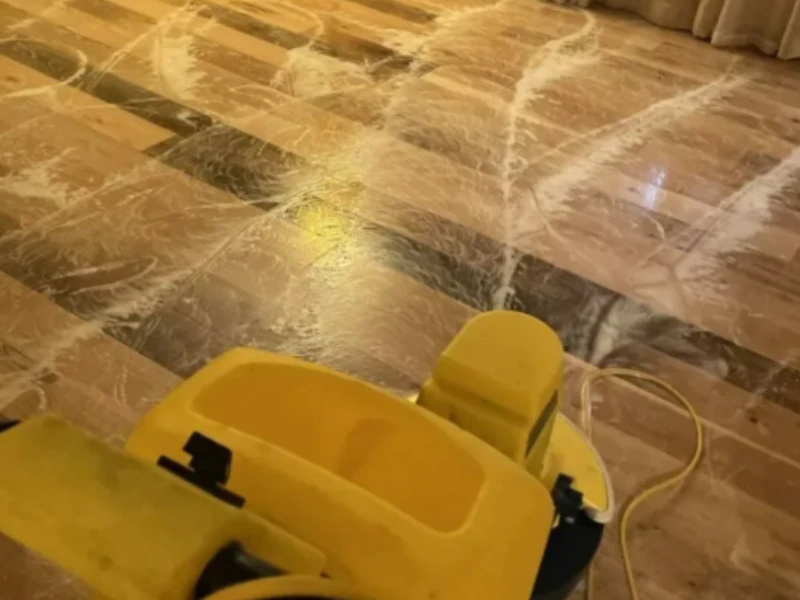
Start from the most distant corner of the room and work toward the door, making a clear exit path as you clean. Direct the machine forward and backward, and release the cleaning solution as you go. Afterwards, make a second pass without discharging solution so the suction can lift moisture and dirt.
The rotating brushes will scrub during both phases, helping remove stains and grime across your hard flooring, such as tile, vinyl, sealed stone, laminate, or hardwood.
5. Rinse the Floor
Fill the tank with warm water without any cleaning solution. Make the same forward‑and‑backward movements, flush the surface, and then allow suction to eliminate remaining dirt and moisture.
This rinsing method works well on sealed hardwood and laminate floors, since it leaves minimal residue buildup and keeps finishes looking clean and protected.
6. Dry Thoroughly
Use a dry mop or absorbent towels to dry the surface. Allow the hard floor to dry thoroughly for about 1 to 2 hours before replacing furniture or allowing foot activity. This prevents watermarks or damage to your flooring.
Open windows and doors or use fans to improve airflow, especially if you have laminate and sealed hardwood floors. They are susceptible to moisture damage, and quick drying is necessary.
Carpet Cleaner vs Hard Floor Cleaner: A Quick Comparison
Using a carpet cleaner machine or solution should be your last option. You already read why it’s not ideal. To make a strong case, here’s a comparison based on different parameters for both machines and solutions for you to consider before deciding to use them on your hardwood flooring:
| Factor (Machine / Solution) | Carpet Cleaner | Hard Floor Cleaner | Professional Insight |
|---|---|---|---|
| Moisture Control (Machine) | High water output designed for soft absorbent fibers | Low-moisture systems with controlled dispensing | NWFA warns that wet mops or steam mops can damage the finish and the wood. |
| Chemical Formulation (Solution) | Alkaline detergents for fiber cleaning | Neutral pH cleaners are safe for sealed surfaces | Use mild, non-acidic cleaners for stone. |
| Brush / Agitation Design (Machine) | Stiff brushes loosen carpet pile | Soft pad/microfiber heads for smooth floors | EPA notes that abrasion and moisture accelerate finish deterioration. |
| Residue Risk (Solution) | Detergents leave sticky residues on smooth floors | Low-residue formulas protect finishes | Use residue-free cleaners. |
| Surface Compatibility (Machine and Solution) | Machines and solutions are intended for porous fibers | Made for sealed, non-porous surfaces | Moisture intrusion damages finishes and seams. |
| Drying Efficiency (Machine and Solution) | Relies on carpet Fibers to wick moisture; residues remain | Designed to leave minimal moisture and residue | CDC confirms Mold grows readily on damp building materials. |
| Long-Term Result (Machine and Solution) | Improper use causes finish loss, swelling, staining, and mold | Protects durability, preserves sealants, and extends floor life | Focus on moisture control for longevity. |
Connect With Our Professional Cleaning Experts Who Know Better
You already know the answer to “can carpet cleaners clean hard floors”; it can be done, but it requires precise efforts and often relies on guesswork. The extensive DIY steps often leave uncertainty about residues, streak marks, or long‑term damage, as it’s always subject to cleaning errors.
Experienced floor cleaners also insist on keeping them as a last resort to clean hard floors. Ditch the guesswork and consider professional floor cleaning services, which is the best way to clean hard floors at home.
Green-Gen Carpet & Fine Rug Cleaning has a team of trained, certified experts who use eco-friendly floor cleaning solutions and high-quality truck-mounted equipment to clean your floors and restore their original look, and deliver long-lasting freshness.
Don’t wait any longer, call us now to schedule your floor cleaning session.
FAQs
Q. What happens if you use carpet cleaner on tile?
Using a carpet cleaner on tile leaves sticky detergent residue and excess dampness. This buildup damages grout, dulls the tile surface, and even creates a slip hazard. It is safer to use pH-neutral tile cleaners or consider damp mopping for effective, finish‑safe results.
Q. Can carpet cleaners damage hardwood floors?
Yes, carpet cleaners damage hardwood floors. They release too much water and utilize detergents formulated for carpet fibers. Over time, this leads to swelling, warping, and deterioration of hardwood surfaces. So, it’s better to use low-moisture cleaners designed to clean hardwood floors.
Q. Can steam cleaners be used on hardwood floors?
No, steam cleaners should not be used on hardwood floors. The high heat and moisture penetrate the wood, causing warping, cupping, and finish damage, leading to costly repairs.
Q. Do carpet cleaners leave residue on hard floors?
Yes, carpet cleaners leave residue on hard floors. The fiber‑targeted detergents don’t absorb into sealed surfaces, so they can form a sticky area that dulls finishes and traps more dirt. Try using hard‑floor‑specific cleaners to avoid such sticky buildup and keep the surface safe.
Q. Can you use carpet cleaner on vinyl flooring?
It’s not recommended to use a carpet cleaner on vinyl flooring. The excess water and fiber‑targeted detergent solutions can leave sticky residue, fade the finish, and even seep into seams, causing visible damage.